INTEGRATION & VALUE REALIZATION
Post-Merger Integration Software
Midaxo's M&A intelligence platform helps integration teams plan from Day 1, run post-merger integration playbooks, and track synergies linked to the original deal thesis.





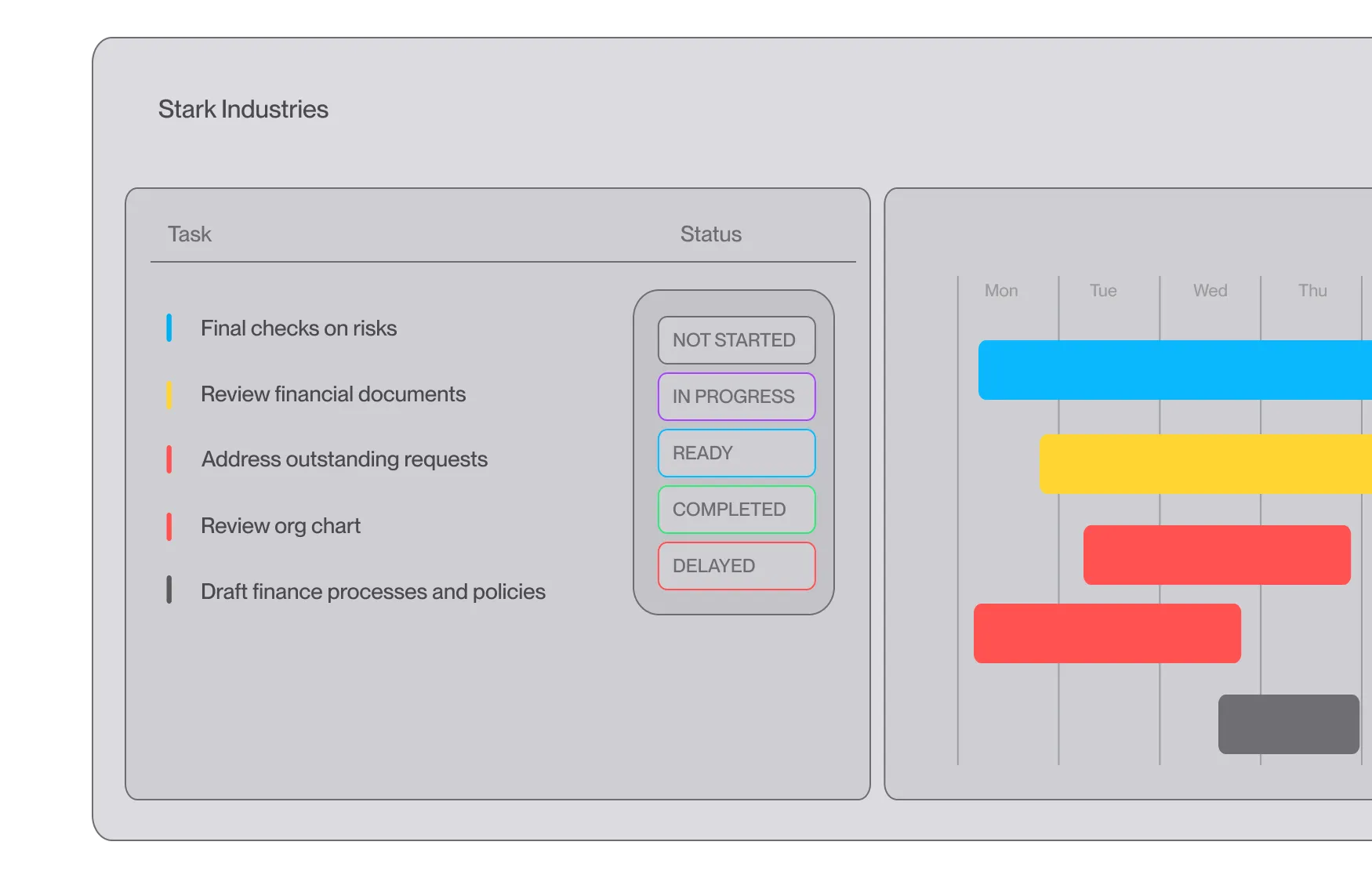
Run Day 1 readiness, 100-day plans, and ongoing integration with playbooks, task trees, and cross-functional coordination.
Link every synergy target to the deal thesis, track delivery against plan, and prove value with one-click outcome reports.
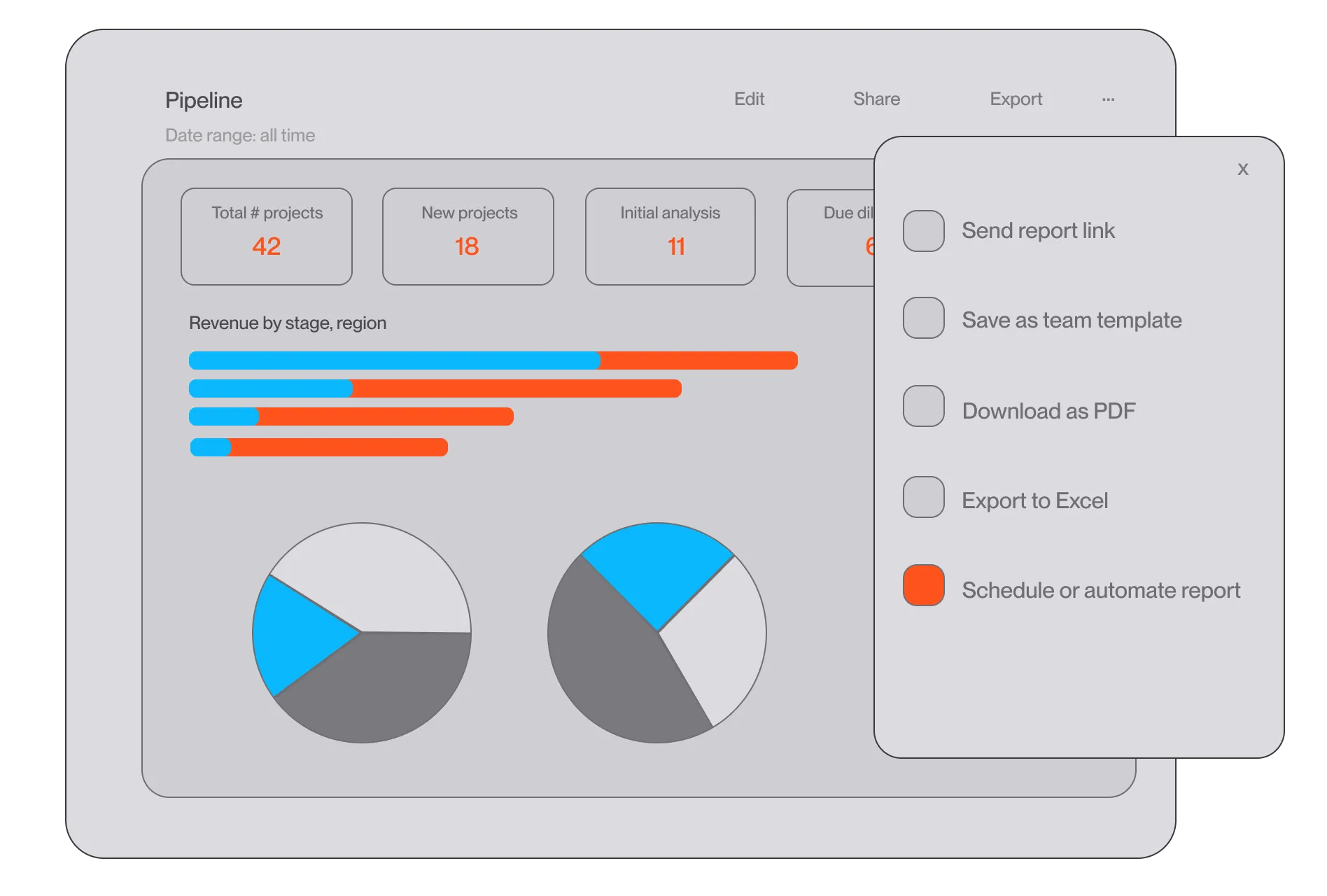
Most of a deal's promised value is delivered, or quietly lost, after close. Midaxo gives integration teams the playbooks, synergy tracking, and connected workflow to turn pre-close assumptions into measured outcomes.
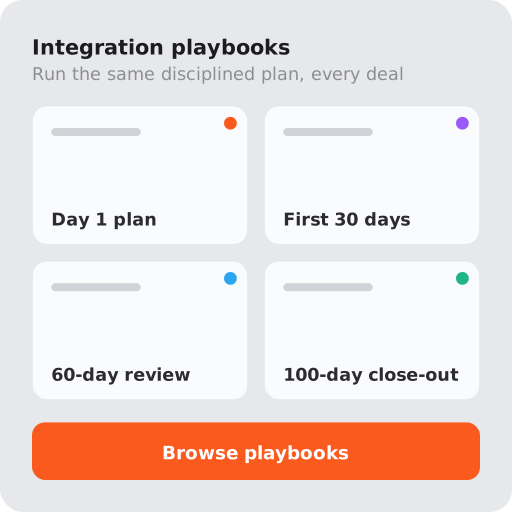
Codify what good integration looks like once and run the same playbook on every deal.
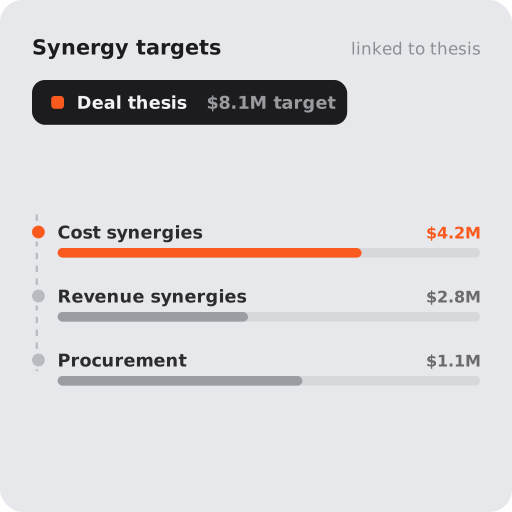
Connect every synergy initiative to the pre-close thesis so value tracking is accurate, not retrofit.
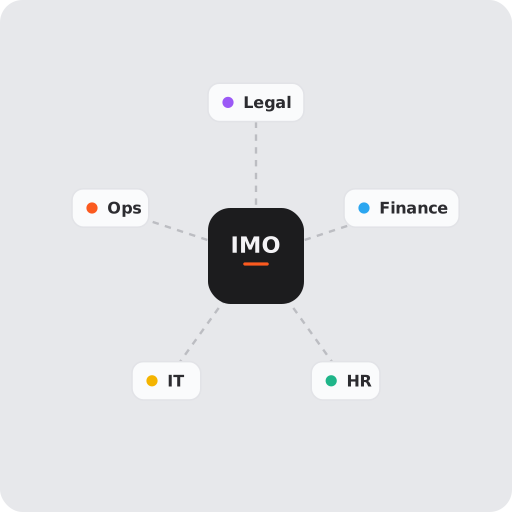
Legal, finance, HR, IT, and operations workstreams coordinated in one system.
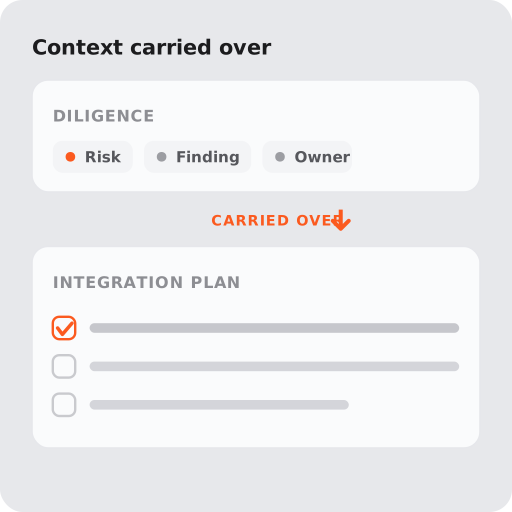
Risks, assumptions, and findings from diligence travel into integration planning automatically.
Midaxo was named a Leader in IDC MarketScape: Worldwide AI-Enabled Deal Management 2025 Vendor Assessment
November 2025
Midaxo covers the full acquisition lifecycle, so diligence findings travel into integration planning and pre-close assumptions become post-close measured outcomes.
Coordinate workstreams, track findings, close deals with full visibility.
Common pain points
Integration plans rebuilt every deal
Generic PM tools that don't account for M&A workflows
Deal thesis and synergy targets drift apart
Rough handoffs between diligence and integration teams
Value realization tracked by hand, if at all
The Midaxo way
Repeatable Day 1 and 100-day playbooks
Workstreams, owners, and milestones built for M&A
Synergies tied to the original deal thesis
Diligence findings carried into integration automatically
One-click value tracking & outcome reports
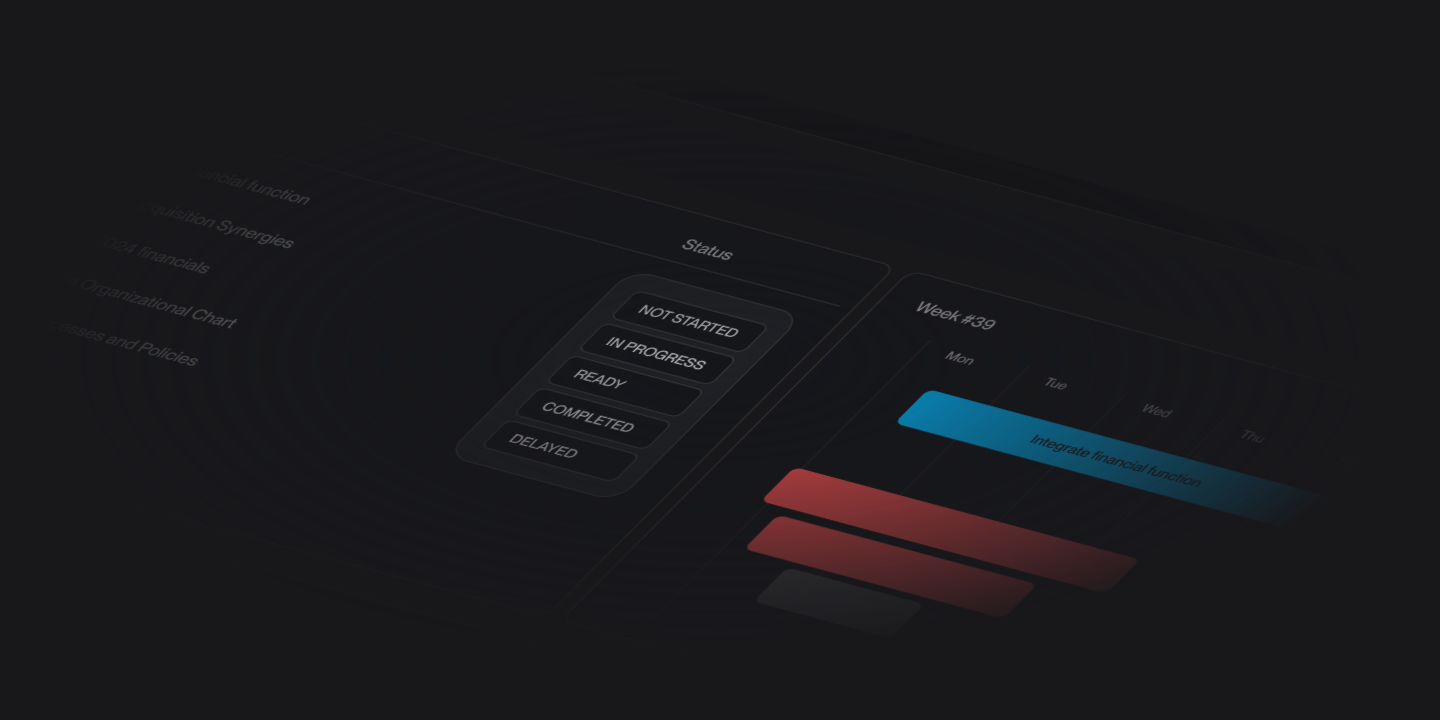
Part 4 of the M&A Intelligence series: why what happens at handoff sets the ceiling for value realization.
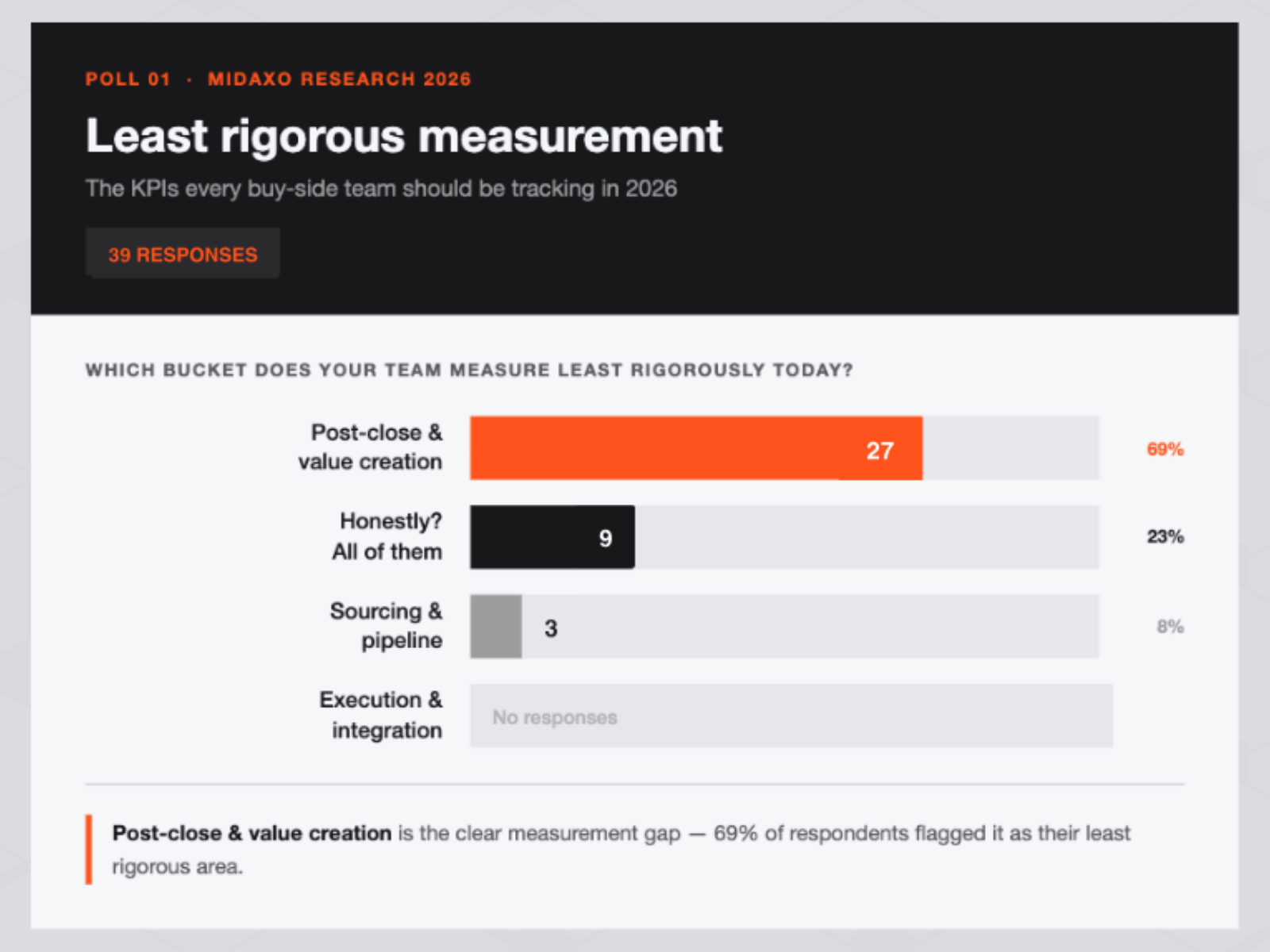
Why integration teams obsess over the to-do list while value realization quietly slips out of view.

Why small acquisitions need just as much integration discipline as big ones, and where most teams cut corners.
2024
(DOC #US52999425, Nov 2025)
2025

Common questions about post-merger integration software and how Midaxo’s platform fits into a corporate development function.
Post-merger integration (PMI) software is purpose-built software that helps integration teams plan Day 1 readiness, run 100-day plans, coordinate legal, finance, HR, IT, and operations workstreams, and track synergy delivery through to value realization. It replaces the spreadsheets, slide decks, and generic project tools most teams stitch together after close with a single system built around M&A workflows, like Midaxo's M&A Intelligence Platform.
A modern PMI platform combines four things: repeatable integration playbooks and templates that codify Day 1 readiness and 100-day plans, a cross-functional Integration Management Office (IMO) that runs every workstream in one place, synergy target setting and tracking linked to the deal thesis, and value realization reporting that shows planned versus actual outcomes for the board. The aim is to make integration disciplined and repeatable rather than reinvented for every deal.
Teams typically move from spreadsheets to dedicated PMI software once integrations cross two to three deals a year, run in parallel, or need synergy claims that are auditable for board reporting. The shift usually happens when M&A becomes a repeatable program rather than a one-off event, and leadership wants live integration dashboards instead of static reports compiled by hand.
Generic project tools were built for repeatable internal projects with consistent stages. M&A integrations have variable timelines, M&A-specific workstreams (legal, finance, HR, IT, ops), synergy targets tied to a deal thesis, and a need to carry diligence findings into integration planning — none of which generic tools model natively. PMI software is built around deal workflows and integration governance, so plans connect directly to deal context instead of living in a separate system.
Investment criteria defined at the strategy level inform synergy targets during integration. Diligence findings, risks, and assumptions captured in the RAID register travel into integration planning automatically. Synergy targets stay linked to the deal thesis. Value realization reporting builds from live integration data, not manual retrospectives. The connected lifecycle is what separates a full M&A platform from a standalone integration tool or a generic project tool.
Most teams are up and running within a few days to a few weeks, supported by onboarding experts. Existing playbooks and task lists can be uploaded and then maintained inside the platform, so you keep your own process while gaining structure and visibility.