Article
M&A in practice
How to manage 3, 5, or 10 acquisitions at once without losing your mind
A practical operations guide to scaling a buy-and-build M&A program.
Article
M&A in practice
A practical operations guide to scaling a buy-and-build M&A program.
June 25, 2026
•
5 minutes

There's the version of buy-and-build M&A that looks great on a whiteboard: find a fragmented market, acquire the best operators, integrate them under a shared platform, and harvest the multiple expansion. Clean, linear, predictable.
But when you're actually running it and have three deals in due diligence, two in integration, one that just closed, and a pipeline of fifteen more targets your VP of Corp Dev wants to discuss on Friday...the whiteboard version suddenly feels like a different world entirely.
Managing multiple acquisitions simultaneously is a difficult operational challenge in private equity and corporate development. Not because any individual deal is intractable, but because the coordination cost compounds faster than the deal count. And without the right structure, friction tends to show up exactly where you can't afford it: in integration delays, missed milestones, and value that was modeled but never captured.
This guide is for the operators actually running these programs: PE-backed platform CFOs, corp dev leads, and integration managers who need to build a repeatable, scalable system before the next LOI lands on their desk.
The failure mode is almost always the same: information is everywhere, accountability is nowhere.
In a single-deal environment, you can manage by walking around. Relationships carry context. It's easy to know what's happening in diligence because you can be in every call. That approach falls apart when you're running concurrent processes across multiple targets in different geographies, different functional stages, and with different counterparties.
What tends to break first:
Pipeline visibility. Without a shared view, deal status lives in people's heads, email threads, and private spreadsheets. Someone has to call someone to find out where a deal actually stands. That call takes time. It also means the picture you get is one person's interpretation of a process that six people are running.
Task ownership. In a multi-deal environment, the same person is often responsible for similar work across three different targets simultaneously. Without clear assignment and status tracking, things fall through the gaps, because there's no reliable system telling them what's overdue.
Document sprawl. Due diligence on a single deal generates hundreds of documents. Multiply that by five deals and you have a version control problem that can genuinely derail a timeline. When the banker asks for the latest quality of earnings, someone has to know exactly where it is and whether it's current.
Reporting overhead. Every portfolio review, every LP update, every board deck requires assembling status from people who are already stretched. If that assembly process is manual, it consumes hours that should be spent on the work itself.
Integration drift. Post-close, the pressure to move on to the next deal is real. But if integration milestones aren't tracked against original deal theses, value realization goes unmeasured.
The teams that run large acquisition programs successfully share a common infrastructure. Here's how to think about each layer.
A single pipeline view across all deals
The starting point is a shared, real-time view of every active opportunity from first look through integration. Rather than updates coming from a status meeting or a weekly email, we recommend instead a persistent, structured source of truth that anyone on the team can access without asking.
The pipeline view should show where each deal is in the process, what's changed since the last review, who owns the active workstreams, and what's blocking forward movement. For a roll-up program in the trades, that means being able to see at a glance that you have two deals in initial analysis, one in full diligence, and three in integration, with meaningful status on each.X
Stage-gated process with defined entry criteria
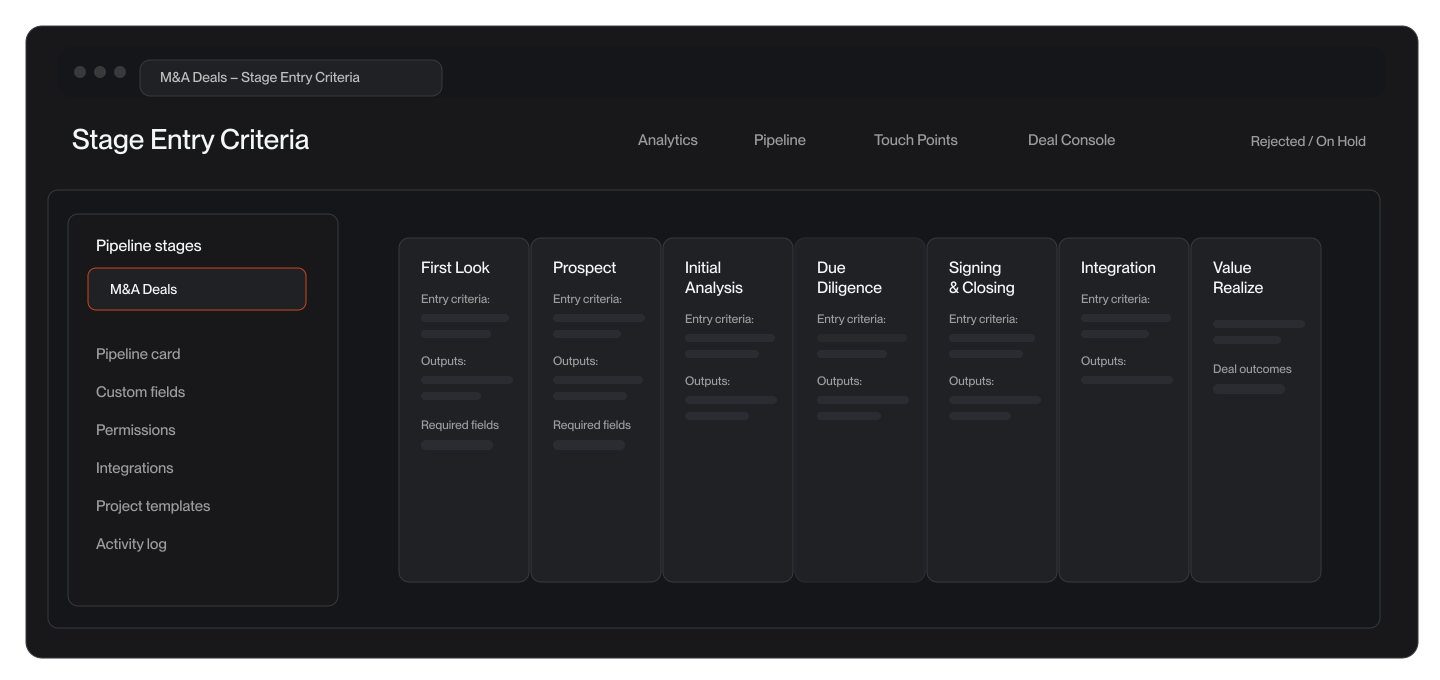
The second element is structure. In a high-volume acquisition program, every deal needs to move through defined stages with explicit entry and exit criteria. Not because M&A is linear, but because without gates, progress is invisible.
Stage entry criteria force discipline: what has to be true before a deal moves from initial analysis to full diligence? What outputs are required before you can move to signing? What integration milestones define "value realization"?
This matters most at scale because it distributes judgment. When the criteria are explicit, a corp dev associate can evaluate whether a deal is ready to advance without needing a senior leader to make that call every time.
Playbooks that travel with every deal
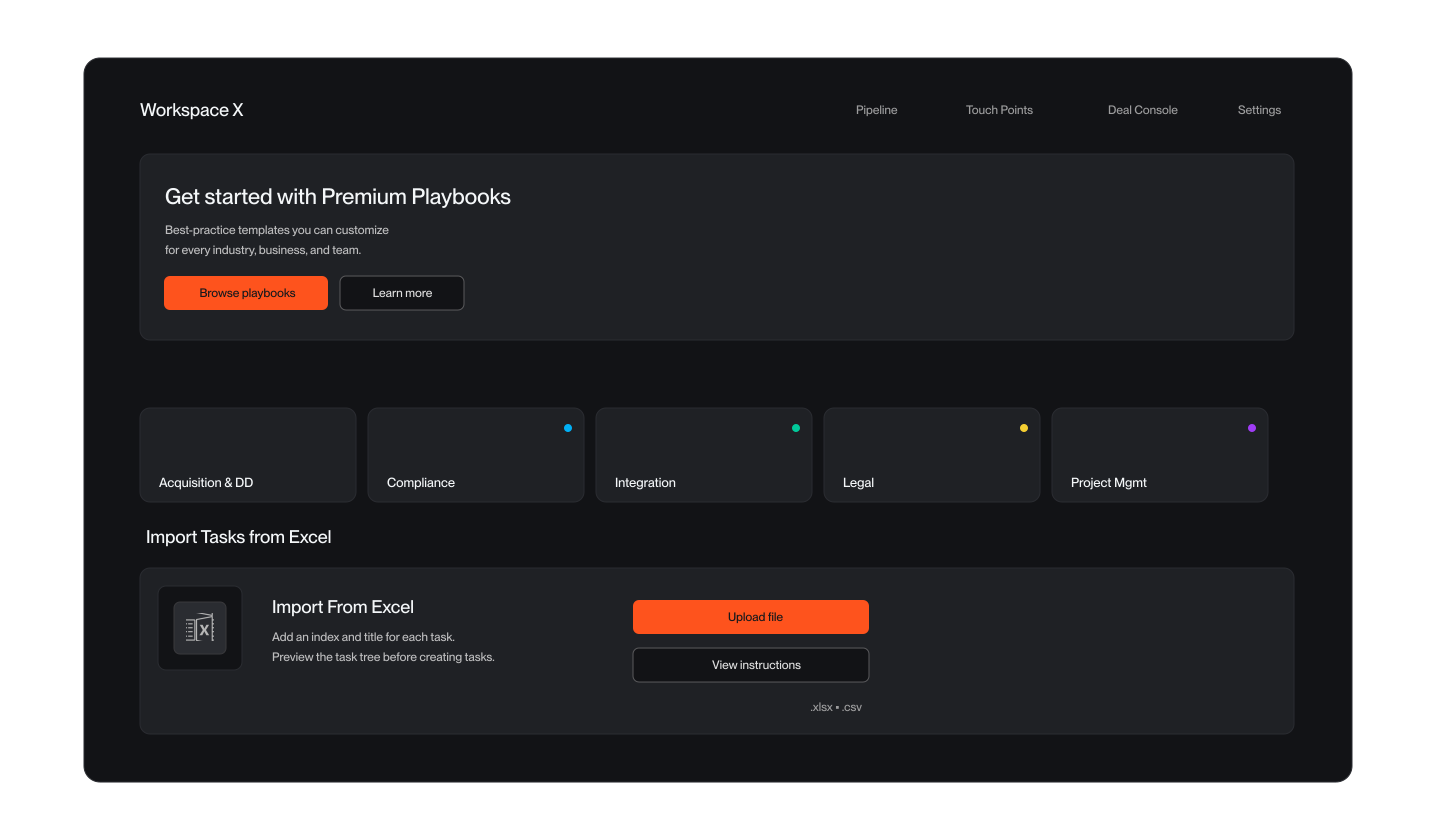
A playbook is a structured template for how you run each stage of a deal. It includes the tasks, sequencing, owners, and timelines that represent your firm's best thinking on how to execute. In a single-deal environment, playbooks are nice to have. In a five-deal environment, they're essential.
The operational leverage comes from reuse. If your diligence playbook is built into your system, every new deal starts with the same foundation. You customize for the specific target, but you're not rebuilding from scratch. Over time, the playbook improves; you add tasks that got missed, remove steps that added no value, and refine the sequencing based on what actually happened.
Deal-level task management with clear ownership
Pipeline visibility and process structure only work if individual tasks are assigned, tracked, and visible to the whole team. This is where execution happens and where multi-deal programs most often fail.
For every active deal, at any point in the process, there should be a clear answer to: what are the open tasks, who owns each one, when are they due, and what's overdue? This shouldn't require a status meeting to answer. It should be visible in the system.
%201.svg)
The same task management structure applies to integration. Post-close milestones (aka.IT system consolidation, org chart finalization, synergy realization) should be tracked the same way pre-close diligence tasks are tracked: with owners, due dates, and status that's visible to leadership without manual reporting.
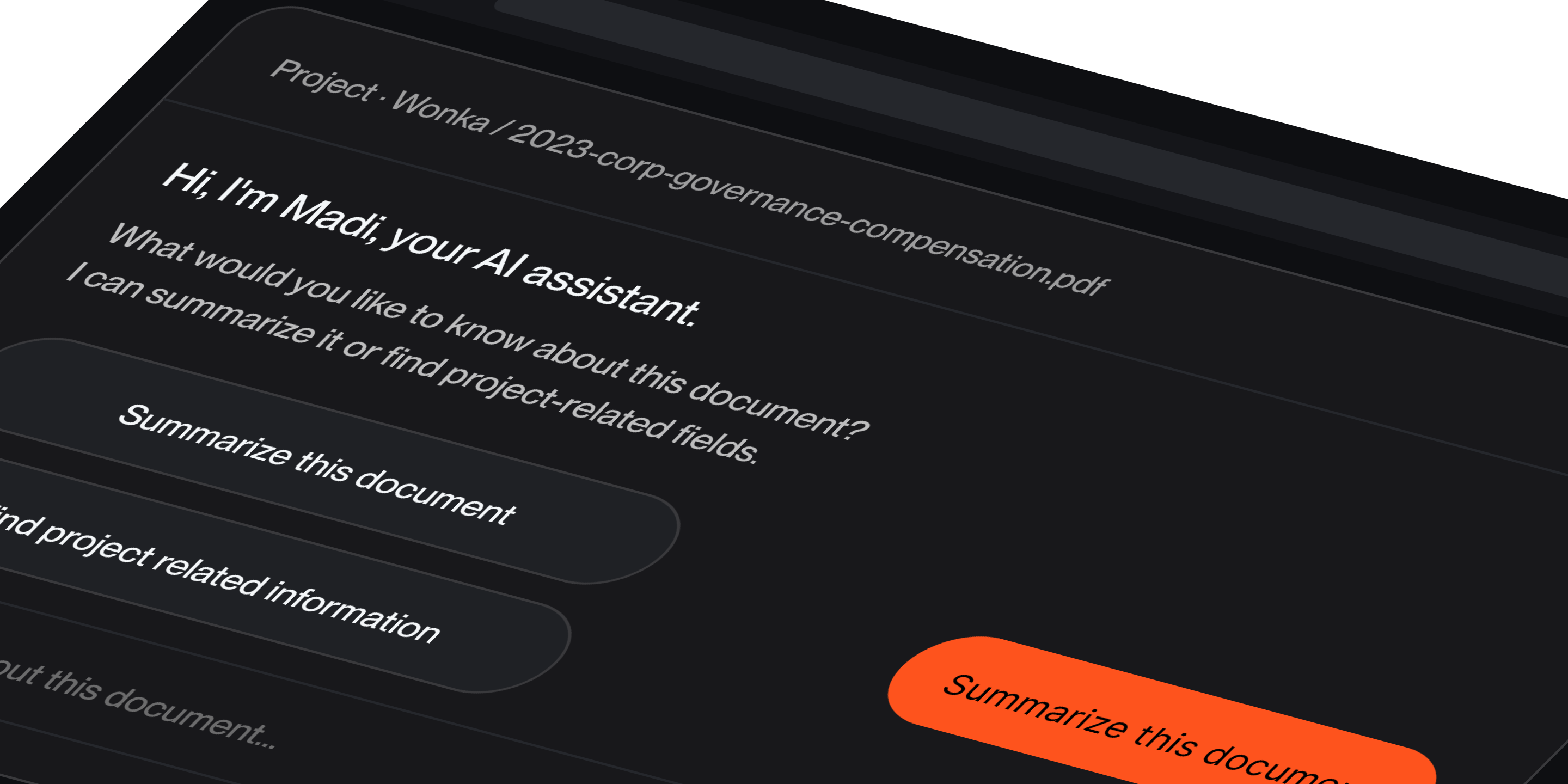
AI-assisted document review and field extraction
At five or ten deals, document volume becomes a real operational constraint. The diligence room for a single mid-market acquisition might contain 300 to 500 documents. Reading them is necessary. Having a human read every one in full is neither efficient nor scalable.
AI-assisted document review tools can process financial statements, management presentations, and legal documents to extract the fields your team needs—revenue figures, EBITDA, headcount, key contract terms—and flag where current data in the system doesn't match what's in the document. This doesn't eliminate the need for human judgment. It compresses the time between document upload and actionable information.
Centralized reporting that builds itself
In a mature multi-deal program, leadership shouldn't be assembling status reports. The system should surface the right information at the right time (deal-by-deal progress, pipeline health, integration milestones, and value realization metrics) in a format that's ready for board review without additional preparation.
This is more of a governance question than an efficiency question, though it solves for efficiency too. When reporting is manual, it's also lagged, filtered through whoever assembled it, and often incomplete. When reporting is built into the workflow, it reflects the actual state of the program.
If you're standing up a multi-deal infrastructure for the first time, the temptation is to build everything at once. Resist it. The sequencing matters.
Start with pipeline structure. Before you standardize playbooks or automate reporting, you need a shared view of what's in the pipeline and where each deal stands. This is the foundation everything else builds on.
Then add process definition. Once the pipeline is visible, define the stages and entry criteria for your specific deal type. For a trades roll-up, that probably means six to eight stages from initial outreach through integration completion.
Then operationalize task management. With stages defined, you can build playbooks for each stage and assign tasks to individuals. This is where the day-to-day work of the deal team gets connected to the structure you've created.
Finally, layer in reporting and analytics. Once the data is clean and the workflow is instrumented, reporting becomes a function of the system rather than a separate activity.
The operational model that works at three deals won't scale to ten without modification. Here's where programs typically hit friction:
At three to five deals, the main challenge is coordination across a small team. Everyone knows what they're working on, but there's no shared view, and information has to be verbally transferred between people. The fix is structural: a shared pipeline, defined stages, and task visibility.
At five to seven deals, the challenge shifts to capacity. The same people are running more deals, and the manual coordination overhead (status calls, document searches, report assembly) starts consuming time that should go toward execution. The fix here is automation and standardization: playbooks that pre-populate tasks, AI-assisted document review that reduces manual extraction, and reporting that runs without assembly effort.
At seven to ten deals and beyond, the challenge is institutional knowledge. How do you make sure that what you learned on deal four informs deal nine? How do you capture the judgment of your best operators in a form that survives turnover and scales to new team members? This is where a mature M&A deal management system pays dividends as a coordination tool and as an organizational memory.
The teams running the most effective multi-deal programs share a few characteristics. They have a pipeline that's visible to the whole team without requiring a status meeting. They have playbooks that travel with every deal from first look through integration. They have task management that makes ownership and overdue items impossible to miss. And they have reporting that leadership can trust without manually assembling it.
Most importantly, they have a system that improves over time. Every deal adds to the institutional knowledge. Every playbook gets refined. The tenth acquisition is executed better than the first, not just because the team is more experienced, but because the process has been continuously improved.
That's what acquisition pipeline software built for scale actually delivers: not just efficiency on any individual deal, but a compounding advantage across an entire program.
If you're managing three, five, or ten acquisitions and your coordination infrastructure isn't keeping pace, it's worth seeing what a purpose-built system looks like in practice.
Jun 27, 2026
•
5 minutes